

Geshe Yeshe Thabkhe
Geshe Yeshe Thabkhe was born in 1930 in Lhokha, Central Tibet and became a monk at the age of 13. After completing his studies at Drepung Loseling Monastery in 1969, he was awarded Geshe Lharampa, the highest degree in the Geluk School of Tibetan Buddhism. He is an emeritus professor at the Central Institute of Higher Tibetan Studies and an eminent scholar of both Madhyamaka and Indian Buddhist studies. His works include Hindi translations of The Essence of Good Explanation of Definitive and Interpretable Meanings by Lama Tsongkhapa and Kamalasila's commentary on the Rice Seedling Sutra. His own commentary, The Rice Seedling Sutra: Buddha’s Teachings on Dependent Arising, was translated into English by Joshua and Diana Cutler and published by Wisdom Publications. Geshela has facilitated many research works, such as a complete translation of Tsongkhapa’s The Great Treatise on the Stages of the Path to Enlightenment, a major project undertaken by the Tibetan Buddhist Learning Center in New Jersey where he teaches regularly.
Featured Series
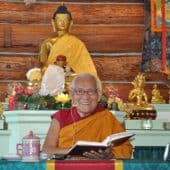
Aryadeva’s 400 Stanzas with Geshe Yeshe Thabkhe (2013-17)
Teachings by Geshe Yeshe Thabkhe on Aryadeva’s Four Hundred Stanzas on the Middle Way given at Sravasti Abbey and Tibetan Buddhist Learning Center, New Jersey. With interpretation into English by Joshua Cutler.
View Series
Kamalashila's Stages of Meditation with Geshe Yeshe Thabkhe (2022)
Commentary by Geshe Yeshe Thabkhe on 8th-century Indian master Kamalashila’s "Stages of Meditation," instructions on the paths of meditation that lead to the fully awakened state of Buddhahood.
View Series
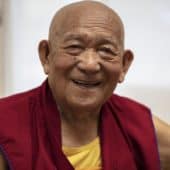
Pramanavarttika with Geshe Yeshe Thabkhe (2018–21)
Geshe Yeshe Thabkhe teaches Dharmakirti's commentary on Dignaga's Compendium on Valid Cognition. With interpretation into English by Joshua Cutler and Katrina Brooks.
View Series
Featured Posts

 Geshe Yeshe Thabkhe
 Prerequisites for serenity
What is needed to meditate on serenity and insight? Both are n...
View Post
The sixteen aspects of the four truths
How the sixteen aspects of the four truths contradict the sixt...
View Post
Proving past and future lives
Verses proving the existence of past and future lives over whi...
View PostView Posts
 Geshe Yeshe Thabkhe
 Prerequisites for serenity
What is needed to meditate on serenity and insight? Both are needed equally to attain…
View Post
Conventional and ultimate bodhicitta
An in-depth discussion of the two types of bodhicitta: conventional and ultimate.
View Post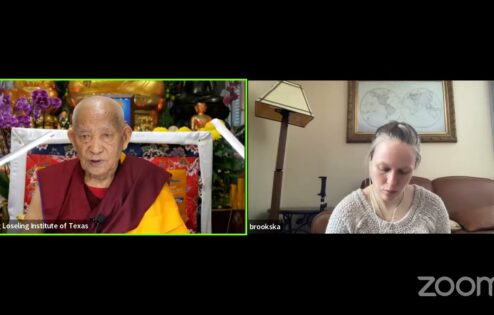
Developing great compassion
Review steps preceding the cultivation of compassion and specific instruction on how to cultivate compassion.
View Post
Developing equanimity
How to meditate on equanimity as the prelude to developing loving kindness and compassion.
View Post

Hearing, thinking, and meditating
Teaching on a text that was written in response to a debate in Tibet in…
View Post
Pramanavartika conclusion
Commentary on refuting the idea that karma and craving are equally to be abandoned, and…
View Post
Refuting the theist-ritualists and Jainas
Completion of commentary on the refutation of theist-ritualist soteriology and beginning the commentary on refuting…
View Post
Refuting the Samkhyas and theist-ritualists
Completion of commentary on refuting Samkhya views and commentary on refuting theist-ritualist views.
View Post
Refuting the Vaisesikas and Samkhyas
Completion of commentary on the refutation of Vaisesika views and beginning of commentary on refutation…
View Post
A refutation of Vaisesika soteriology
Completion of commentary on the section "Self and Suffering” and beginning the section on “A…
View Post
Self and suffering, part 2 with questions and answers
Continued commentary on the section "Self and Suffering” and Venerable Thubten Chodron answers questions.
View Post